%20%20--%3E%0A%3Csvg%20version%3D%221.1%22%20xmlns%3D%22http%3A%2F%2Fwww.w3.org%2F2000%2Fsvg%22%20xmlns%3Axlink%3D%22http%3A%2F%2Fwww.w3.org%2F1999%2Fxlink%22%20x%3D%220px%22%20y%3D%220px%22%0A%09%20viewBox%3D%220%200%202634%20200%22%20style%3D%22enable-background%3Anew%200%200%202634%20200%3B%22%20xml%3Aspace%3D%22preserve%22%3E%0A%3Cstyle%20type%3D%22text%2Fcss%22%3E%0A%09.st0%7Bfill%3A%23231F20%3B%7D%0A%09.st1%7Bfill%3A%23004A8D%3B%7D%0A%09.st2%7Bfill%3A%237BB2DE%3B%7D%0A%09.st3%7Bfill%3A%23FFFFFF%3B%7D%0A%09.st4%7Bfill%3A%23634F2E%3B%7D%0A%09.st5%7Bopacity%3A0.5%3Bfill%3A%23634F2E%3B%7D%0A%09.st6%7Bopacity%3A0.35%3B%7D%0A%09.st7%7Bfill%3A%23B08C5A%3B%7D%0A%3C%2Fstyle%3E%0A%3Cg%20id%3D%22Template%22%3E%0A%3C%2Fg%3E%0A%3Cg%20id%3D%22Layer_2%22%3E%0A%09%3Cg%3E%0A%09%09%3Cpolygon%20class%3D%22st3%22%20points%3D%22169.1%2C0%20110.6%2C0%2052.6%2C91.1%2052.6%2C0%200%2C0%200%2C200%2052.6%2C200%2052.6%2C161.7%2081.4%2C121.7%20115.4%2C200%20172%2C200%20%0A%09%09%09114.3%2C76.3%20%09%09%22%2F%3E%0A%09%09%3Crect%20x%3D%22190.6%22%20class%3D%22st3%22%20width%3D%2253.7%22%20height%3D%22200%22%2F%3E%0A%09%09%3Cpolygon%20class%3D%22st3%22%20points%3D%22398%2C106.3%20332.5%2C0%20279.1%2C0%20279.1%2C200%20331.1%2C200%20331.1%2C85.4%20402.3%2C200%20450%2C200%20450%2C0%20398%2C0%20%09%09%22%2F%3E%0A%09%09%3Cpath%20class%3D%22st3%22%20d%3D%22M600%2C0h-78.9c-26.3%2C0-38.9%2C12.6-38.9%2C38.9v122.3c0%2C26.3%2C12.6%2C38.9%2C38.9%2C38.9H600c26.3%2C0%2C38.9-12.6%2C38.9-38.9%0A%09%09%09V83.4h-82.6v42.3h29.4v25.1c0%2C4-1.1%2C5.1-5.1%2C5.1h-39.4c-4%2C0-5.1-1.1-5.1-5.1V49.1c0-4%2C1.1-5.1%2C5.1-5.1h39.4c4%2C0%2C5.1%2C1.1%2C5.1%2C5.1%0A%09%09%09V66h53.1V38.9C638.8%2C12.6%2C626.2%2C0%2C600%2C0z%22%2F%3E%0A%09%09%3Cpath%20class%3D%22st3%22%20d%3D%22M777.1%2C83.1l-53.1-14.3c-5.1-1.4-6-2.3-6-5.4V48c0-4%2C1.1-5.1%2C5.1-5.1h32.9c4%2C0%2C5.1%2C1.1%2C5.1%2C5.1v16.3h53.7%0A%09%09%09V38.9c0-26.3-12.6-38.9-38.9-38.9h-72.9c-26.3%2C0-38.9%2C12.6-38.9%2C38.9v34.9c0%2C28.6%2C13.1%2C33.4%2C41.1%2C41.1l53.1%2C14.6%0A%09%09%09c4.6%2C1.1%2C6%2C2%2C6%2C5.1V152c0%2C4-1.1%2C5.1-5.1%2C5.1h-36.9c-4%2C0-5.1-1.1-5.1-5.1v-18.3h-53.7v27.4c0%2C26.3%2C12.6%2C38.9%2C38.9%2C38.9h76.9%0A%09%09%09c26.3%2C0%2C38.9-12.6%2C38.9-38.9v-36.9C818.2%2C95.7%2C805.1%2C90.6%2C777.1%2C83.1z%22%2F%3E%0A%09%09%3Cpath%20class%3D%22st3%22%20d%3D%22M961.3%2C61.6h-42.9c-17%2C0-26.7%2C8-30.3%2C25L876.2%2C142c-3.6%2C17%2C2.7%2C25%2C19.7%2C25h42.9c17%2C0%2C26.7-8%2C30.3-25%0A%09%09%09l11.8-55.4C984.5%2C69.6%2C978.2%2C61.6%2C961.3%2C61.6z%20M945.6%2C92.8l-9.1%2C42.9c-0.6%2C2.9-1.8%2C3.9-4.7%2C3.9h-17.2c-2.9%2C0-3.7-1-3.1-3.9%0A%09%09%09l9.1-42.9c0.6-2.9%2C1.8-3.9%2C4.7-3.9h17.2C945.5%2C88.9%2C946.3%2C89.9%2C945.6%2C92.8z%22%2F%3E%0A%09%09%3Cpath%20class%3D%22st3%22%20d%3D%22M1014.8%2C49.5l-2.6%2C12.1h-14.8l-5.6%2C26.4h14.8l-16.8%2C79h34.7l16.8-79h20.7l5.6-26.4h-20.7l1.5-7%0A%09%09%09c0.6-2.9%2C1.8-3.9%2C4.7-3.9h14.8l5.6-26.2h-28.5C1028.1%2C24.5%2C1018.4%2C32.5%2C1014.8%2C49.5z%22%2F%3E%0A%09%09%3Cpolygon%20class%3D%22st3%22%20points%3D%221299.4%2C0%201240.8%2C0%201182.8%2C91.1%201182.8%2C0%201130.2%2C0%201130.2%2C200%201182.8%2C200%201182.8%2C161.7%201211.6%2C121.7%20%0A%09%09%091245.6%2C200%201302.2%2C200%201244.5%2C76.3%20%09%09%22%2F%3E%0A%09%09%3Cpath%20class%3D%22st3%22%20d%3D%22M1364.2%2C0l-60.3%2C200h54.9l10.6-41.1h58.9l10.6%2C41.1h57.1L1435.1%2C0H1364.2z%20M1380.2%2C116l18.6-72.3l18.6%2C72.3%0A%09%09%09H1380.2z%22%2F%3E%0A%09%09%3Cpath%20class%3D%22st3%22%20d%3D%22M1610.8%2C148.6c0%2C3.4-1.7%2C5.1-5.1%2C5.1h-37.1c-3.4%2C0-5.1-1.7-5.1-5.1V0h-53.7v161.1c0%2C25.1%2C13.7%2C38.9%2C38.9%2C38.9%0A%09%09%09h77.1c25.1%2C0%2C38.9-13.7%2C38.9-38.9V0h-53.7V148.6z%22%2F%3E%0A%09%09%3Cpolygon%20class%3D%22st3%22%20points%3D%221698.5%2C200%201752.2%2C200%201752.2%2C123.4%201821%2C123.4%201821%2C79.4%201752.2%2C79.4%201752.2%2C44.6%201839%2C44.6%201839%2C0%20%0A%09%09%091698.5%2C0%20%09%09%22%2F%3E%0A%09%09%3Cpolygon%20class%3D%22st3%22%20points%3D%221862.7%2C200%201916.4%2C200%201916.4%2C123.4%201985.3%2C123.4%201985.3%2C79.4%201916.4%2C79.4%201916.4%2C44.6%202003.3%2C44.6%20%0A%09%09%092003.3%2C0%201862.7%2C0%20%09%09%22%2F%3E%0A%09%09%3Cpolygon%20class%3D%22st3%22%20points%3D%222132.4%2C105.1%202087.6%2C0%202027%2C0%202027%2C200%202077.9%2C200%202077.9%2C84.9%202115.3%2C175.7%202147.9%2C175.7%20%0A%09%09%092185.3%2C84.9%202185.3%2C200%202237.3%2C200%202237.3%2C0%202177.3%2C0%20%09%09%22%2F%3E%0A%09%09%3Cpath%20class%3D%22st3%22%20d%3D%22M2315.5%2C0l-60.3%2C200h54.9l10.6-41.1h58.9l10.6%2C41.1h57.1L2386.4%2C0H2315.5z%20M2331.6%2C116l18.6-72.3l18.6%2C72.3%0A%09%09%09H2331.6z%22%2F%3E%0A%09%09%3Cpolygon%20class%3D%22st3%22%20points%3D%222584.1%2C0%202584.1%2C106.3%202518.7%2C0%202465.3%2C0%202465.3%2C200%202517.3%2C200%202517.3%2C85.4%202588.4%2C200%202636.1%2C200%20%0A%09%09%092636.1%2C0%20%09%09%22%2F%3E%0A%09%3C%2Fg%3E%0A%3C%2Fg%3E%0A%3C%2Fsvg%3E%0A)

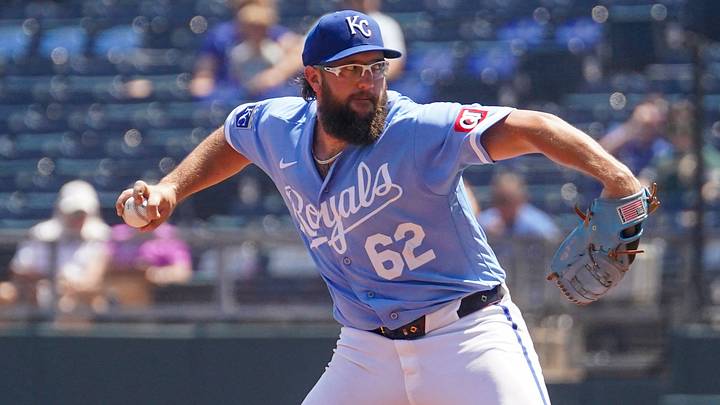
The Kansas City Royals have not had much go right this season, but things can always be worse. It was a little more than 20 years ago that manager Buddy Bell reminded fans of that fact. This season could have certainly been better for the Royals, though, after they entered the year with a competitive path in the AL Central that both the Kauffman faithful and national pundits believed in. Alas, this is why the game is played.
In a field of surprising underperformers, pitcher Randy Dobnak stands as the inverse of those surprises. The former Minnesota Twins pitcher could not break through in the Seattle Mariners organization, and the Royals purchased his contract in mid-June. Coupled with his strong performance in Triple-A Omaha and Kansas City's mounting injury woes, Dobnak has gotten an extended run in the rotation, and the results have been stupendous.
Since the All-Star break, Dobnak owns a 1.50 ERA, the second-best mark in the AL in that span, all while allowing only one home run. The box score usually tells a good story for Dobnak, even if the process behind it is far from elite.
The reality is Kansas City will likely start 2027 with a rotation's worth of starters on the 60-day IL, led by Cole Ragans and Stephen Kolek. There is a genuine need for innings in Kansas City to at least open next season, and possibly well into the summer. With Dobnak already holding a placard in the clubhouse, the question is not so much whether he will be on the roster, but how much he can actually help the rotation if he is.
With that in mind, here are the signs he can help the Royals next season and the ones that say it is all waiting to fall apart.
Solution: Randy Dobnak is proven ground-ball pitcher with two Gold Glove infielders
If there is one thing Dobnak has done consistently well at the MLB level, it is get groundballs from opposing batters. That is the case again in 2026, as his 53.6% groundball rate as a starter ranks tied for seventh-best among starting pitchers with 30 or more innings pitched. Even if the hard contact allowed is higher than desirable, a hard-hit ball pounded into the ground is going to be an out more often than not. Thankfully for Dobnak, he has an infield behind him built to increase those odds.
Shortstop Bobby Witt Jr. and third baseman Maikel Garcia, when healthy of course, have both established themselves as elite fielders at their positions, with Witt holding a case as the most valuable defender in the game. Garcia's natural shortstop skills translated seamlessly to the hot corner last season, and even if injuries have sapped his playing time and some of his production, he is still better than most third basemen with the glove.
Dobnak's pitching style requires fielders to make the plays behind him. If he were pitching in front of a poor defensive team, his ERA would likely be much higher than it is. But Kansas City has some genuinely competent fielders, and if Witt and Garcia are behind Dobnak, that provides an elite tandem to gobble up those groundballs.
Mirage: The expected numbers don't think Randy Dobnak's performance is sustainable
Once a ball gets put into play, there are so many variables that can turn soft-hit balls into seeing-eye singles or a flare to right field scoring two. While Dobnak has a pattern of how his batted balls tend to play out, that is not a guaranteed outcome. Even if he induces the perfect double-play grounder, that requires three players to make the right play quickly enough for the desired result. That is why strikeouts are king right now in baseball.
According to FanGraphs, "groundballs go for hits more often than flyballs (although they don't result in extra base hits as often)," and that fact inflates Dobnak's expected numbers. The righty is outperforming all major expected batting statistics, including xBA, xSLG, and xwOBA. His 4.75 xERA represents one of the largest gaps among MLB starting pitchers and sits in the 23rd percentile. But because batters struggle to barrel up Dobnak's pitches and he generates plenty of groundballs, his back-of-the-baseball-card stats read more impressively than the computer formulas suggest.
One of the most predictive stats of a pitcher's future ERA is SIERA, or Skill-Interactive ERA. FanGraphs has a good breakdown of the guts of this number, but overall it provides a better lens than xFIP for pitchers who rely on batted balls to get outs. Dobnak carries a 4.80 SIERA, which is remarkably close to his xERA and certainly much closer to reality than his current ERA. The projections, predictions, and expected metrics all converge on the same conclusion about Dobnak in 2026: he is pitching above his head.
Solution: Randy Dobnak's durable track record, arm angle give possible stability
The Royals had a minor trend in the pitchers they acquired since the All-Star break, with many of them carrying lower arm angles than the MLB average. This reflects a larger league-wide shift, as the average arm angle of starting pitchers is at its lowest point ever. Studies have shown that while overhead pitchers may generate more movement or deception, sidearm pitchers experience significantly less torque on their elbow and less stress on their shoulders. All of that translates to better durability projections for sidearm pitchers, and Dobnak is firmly in that bucket.
Dobnak has an average 19-degree arm angle in 2026, the lowest since his debut season in 2020. It has shifted marginally over the years, peaking at 23 degrees last season. The change seems to stem from Dobnak focusing more on trunk control and posture coming down the mound rather than manipulating the arm itself. These are minor adjustments, but while the MLB starting pitcher carries an average arm angle of 37.6 degrees, Dobnak clearly stands out and sits in the range most associated with injury prevention.
How has this translated for Dobnak? He has never had an elbow or shoulder injury land him on the IL (even if he missed notable time with a right middle finger strain years ago). Does this mean Dobnak is immune from a UCL injury or rotator cuff strain? Absolutely not. But his odds of avoiding those injuries are greater than many of his peers, and while Kansas City can afford some injury-related gambles, Dobnak provides a floor for availability. A skilled player who is always hurt cannot help the team win.
Mirage: Randy Dobnak has some of MLB's worst "stuff"
The title says it all. But how much of an outlier is Dobnak when it comes to how his stuff relates to his game-level results? The biggest one. Just look in the top left corner.
If you didn't think that Randy Dobnak's run with the Royals was a massive outlier, he is in a league of his own among MLB starters. pic.twitter.com/S1JZbkx1J2
— Jacob Milham (@JacobMilhamKC) August 19, 2026
ERA says Dobnak is as good a pitcher as NL Cy Young favorite Jacob Misiorowski, but the stuff says the two could not be farther apart. The trend across baseball says better stuff leads to better run prevention, and Dobnak is flying in the face of that. The degree to which he is doing so is genuinely alarming.
Hop back into FanGraphs and look at pitchers with at least 20 innings this season. Ranking them by Stuff+, where 100 is average, Dobnak is tied for fourth-worst at 82. His 1.58 ERA this season is miles better than his peers, such as Colorado's Tomoyuki Sugano, who carries the same Stuff+ but a 4.70 ERA for the Rockies. Stuff is not everything, but it is something, right?
This is nothing new for Dobnak, who has never posted a Stuff+ higher than 91. But he has inversely excellent Location+, with his 2026 mark matching his career 109 Location+. That is tied for 23rd-best in the aforementioned sample, yet still another data point showing Dobnak is pitching well above his arsenal's weight in a Royals uniform.
Solution: Who else do the Royals have?
Sometimes a subpar answer is still an answer to the question. Kansas City does not have the luxury of simply ignoring the problem and hoping the innings will magically be covered every game. Dobnak figures to at least be a cost-controlled option capable of covering multiple innings, even if they are far from elite in nature.
The Royals' aforementioned volume of starting options recovering from surgery makes their desperate rotation need hopefully temporary. There is a hope that everything goes well and Ragans, Kolek, Ryan Bergert, and others come off the IL ready to help the big league club.
But even if Michael Wacha, Seth Lugo, and Noah Cameron all remain healthy by Opening Day 2027, that leaves two gaping holes in the rotation with no internal answers. Steven Zobac is not poised for a big league jump. Prospects Kendry Chourio and David Shields still need more time on the farm. There simply is not a pitcher in Triple-A, let alone Double-A, who screams readiness for MLB starts next March.
Dobnak at least has the experience, he has the innings, and he has the investment level to earn some run in the rotation next year. Whether the 2027 results are pleasurable remains to be seen. But that is why the season is played and the World Series champion is not crowned on paper. Here is hoping Dobnak can be a guy next season, because right now, the Royals' options at that role are few and far between.
 Add us as a preferred source on Google