%20%20--%3E%0A%3Csvg%20version%3D%221.1%22%20xmlns%3D%22http%3A%2F%2Fwww.w3.org%2F2000%2Fsvg%22%20xmlns%3Axlink%3D%22http%3A%2F%2Fwww.w3.org%2F1999%2Fxlink%22%20x%3D%220px%22%20y%3D%220px%22%0A%09%20viewBox%3D%220%200%202634%20200%22%20style%3D%22enable-background%3Anew%200%200%202634%20200%3B%22%20xml%3Aspace%3D%22preserve%22%3E%0A%3Cstyle%20type%3D%22text%2Fcss%22%3E%0A%09.st0%7Bfill%3A%23231F20%3B%7D%0A%09.st1%7Bfill%3A%23004A8D%3B%7D%0A%09.st2%7Bfill%3A%237BB2DE%3B%7D%0A%09.st3%7Bfill%3A%23FFFFFF%3B%7D%0A%09.st4%7Bfill%3A%23634F2E%3B%7D%0A%09.st5%7Bopacity%3A0.5%3Bfill%3A%23634F2E%3B%7D%0A%09.st6%7Bopacity%3A0.35%3B%7D%0A%09.st7%7Bfill%3A%23B08C5A%3B%7D%0A%3C%2Fstyle%3E%0A%3Cg%20id%3D%22Template%22%3E%0A%3C%2Fg%3E%0A%3Cg%20id%3D%22Layer_2%22%3E%0A%09%3Cg%3E%0A%09%09%3Cpolygon%20class%3D%22st3%22%20points%3D%22169.1%2C0%20110.6%2C0%2052.6%2C91.1%2052.6%2C0%200%2C0%200%2C200%2052.6%2C200%2052.6%2C161.7%2081.4%2C121.7%20115.4%2C200%20172%2C200%20%0A%09%09%09114.3%2C76.3%20%09%09%22%2F%3E%0A%09%09%3Crect%20x%3D%22190.6%22%20class%3D%22st3%22%20width%3D%2253.7%22%20height%3D%22200%22%2F%3E%0A%09%09%3Cpolygon%20class%3D%22st3%22%20points%3D%22398%2C106.3%20332.5%2C0%20279.1%2C0%20279.1%2C200%20331.1%2C200%20331.1%2C85.4%20402.3%2C200%20450%2C200%20450%2C0%20398%2C0%20%09%09%22%2F%3E%0A%09%09%3Cpath%20class%3D%22st3%22%20d%3D%22M600%2C0h-78.9c-26.3%2C0-38.9%2C12.6-38.9%2C38.9v122.3c0%2C26.3%2C12.6%2C38.9%2C38.9%2C38.9H600c26.3%2C0%2C38.9-12.6%2C38.9-38.9%0A%09%09%09V83.4h-82.6v42.3h29.4v25.1c0%2C4-1.1%2C5.1-5.1%2C5.1h-39.4c-4%2C0-5.1-1.1-5.1-5.1V49.1c0-4%2C1.1-5.1%2C5.1-5.1h39.4c4%2C0%2C5.1%2C1.1%2C5.1%2C5.1%0A%09%09%09V66h53.1V38.9C638.8%2C12.6%2C626.2%2C0%2C600%2C0z%22%2F%3E%0A%09%09%3Cpath%20class%3D%22st3%22%20d%3D%22M777.1%2C83.1l-53.1-14.3c-5.1-1.4-6-2.3-6-5.4V48c0-4%2C1.1-5.1%2C5.1-5.1h32.9c4%2C0%2C5.1%2C1.1%2C5.1%2C5.1v16.3h53.7%0A%09%09%09V38.9c0-26.3-12.6-38.9-38.9-38.9h-72.9c-26.3%2C0-38.9%2C12.6-38.9%2C38.9v34.9c0%2C28.6%2C13.1%2C33.4%2C41.1%2C41.1l53.1%2C14.6%0A%09%09%09c4.6%2C1.1%2C6%2C2%2C6%2C5.1V152c0%2C4-1.1%2C5.1-5.1%2C5.1h-36.9c-4%2C0-5.1-1.1-5.1-5.1v-18.3h-53.7v27.4c0%2C26.3%2C12.6%2C38.9%2C38.9%2C38.9h76.9%0A%09%09%09c26.3%2C0%2C38.9-12.6%2C38.9-38.9v-36.9C818.2%2C95.7%2C805.1%2C90.6%2C777.1%2C83.1z%22%2F%3E%0A%09%09%3Cpath%20class%3D%22st3%22%20d%3D%22M961.3%2C61.6h-42.9c-17%2C0-26.7%2C8-30.3%2C25L876.2%2C142c-3.6%2C17%2C2.7%2C25%2C19.7%2C25h42.9c17%2C0%2C26.7-8%2C30.3-25%0A%09%09%09l11.8-55.4C984.5%2C69.6%2C978.2%2C61.6%2C961.3%2C61.6z%20M945.6%2C92.8l-9.1%2C42.9c-0.6%2C2.9-1.8%2C3.9-4.7%2C3.9h-17.2c-2.9%2C0-3.7-1-3.1-3.9%0A%09%09%09l9.1-42.9c0.6-2.9%2C1.8-3.9%2C4.7-3.9h17.2C945.5%2C88.9%2C946.3%2C89.9%2C945.6%2C92.8z%22%2F%3E%0A%09%09%3Cpath%20class%3D%22st3%22%20d%3D%22M1014.8%2C49.5l-2.6%2C12.1h-14.8l-5.6%2C26.4h14.8l-16.8%2C79h34.7l16.8-79h20.7l5.6-26.4h-20.7l1.5-7%0A%09%09%09c0.6-2.9%2C1.8-3.9%2C4.7-3.9h14.8l5.6-26.2h-28.5C1028.1%2C24.5%2C1018.4%2C32.5%2C1014.8%2C49.5z%22%2F%3E%0A%09%09%3Cpolygon%20class%3D%22st3%22%20points%3D%221299.4%2C0%201240.8%2C0%201182.8%2C91.1%201182.8%2C0%201130.2%2C0%201130.2%2C200%201182.8%2C200%201182.8%2C161.7%201211.6%2C121.7%20%0A%09%09%091245.6%2C200%201302.2%2C200%201244.5%2C76.3%20%09%09%22%2F%3E%0A%09%09%3Cpath%20class%3D%22st3%22%20d%3D%22M1364.2%2C0l-60.3%2C200h54.9l10.6-41.1h58.9l10.6%2C41.1h57.1L1435.1%2C0H1364.2z%20M1380.2%2C116l18.6-72.3l18.6%2C72.3%0A%09%09%09H1380.2z%22%2F%3E%0A%09%09%3Cpath%20class%3D%22st3%22%20d%3D%22M1610.8%2C148.6c0%2C3.4-1.7%2C5.1-5.1%2C5.1h-37.1c-3.4%2C0-5.1-1.7-5.1-5.1V0h-53.7v161.1c0%2C25.1%2C13.7%2C38.9%2C38.9%2C38.9%0A%09%09%09h77.1c25.1%2C0%2C38.9-13.7%2C38.9-38.9V0h-53.7V148.6z%22%2F%3E%0A%09%09%3Cpolygon%20class%3D%22st3%22%20points%3D%221698.5%2C200%201752.2%2C200%201752.2%2C123.4%201821%2C123.4%201821%2C79.4%201752.2%2C79.4%201752.2%2C44.6%201839%2C44.6%201839%2C0%20%0A%09%09%091698.5%2C0%20%09%09%22%2F%3E%0A%09%09%3Cpolygon%20class%3D%22st3%22%20points%3D%221862.7%2C200%201916.4%2C200%201916.4%2C123.4%201985.3%2C123.4%201985.3%2C79.4%201916.4%2C79.4%201916.4%2C44.6%202003.3%2C44.6%20%0A%09%09%092003.3%2C0%201862.7%2C0%20%09%09%22%2F%3E%0A%09%09%3Cpolygon%20class%3D%22st3%22%20points%3D%222132.4%2C105.1%202087.6%2C0%202027%2C0%202027%2C200%202077.9%2C200%202077.9%2C84.9%202115.3%2C175.7%202147.9%2C175.7%20%0A%09%09%092185.3%2C84.9%202185.3%2C200%202237.3%2C200%202237.3%2C0%202177.3%2C0%20%09%09%22%2F%3E%0A%09%09%3Cpath%20class%3D%22st3%22%20d%3D%22M2315.5%2C0l-60.3%2C200h54.9l10.6-41.1h58.9l10.6%2C41.1h57.1L2386.4%2C0H2315.5z%20M2331.6%2C116l18.6-72.3l18.6%2C72.3%0A%09%09%09H2331.6z%22%2F%3E%0A%09%09%3Cpolygon%20class%3D%22st3%22%20points%3D%222584.1%2C0%202584.1%2C106.3%202518.7%2C0%202465.3%2C0%202465.3%2C200%202517.3%2C200%202517.3%2C85.4%202588.4%2C200%202636.1%2C200%20%0A%09%09%092636.1%2C0%20%09%09%22%2F%3E%0A%09%3C%2Fg%3E%0A%3C%2Fg%3E%0A%3C%2Fsvg%3E%0A)

Kansas City Royals first baseman Jac Caglianone was a first baseman in college, not counting his action on the mound. Serious Royals fans were watching Double-A Northwest Arkansas lineups daily early last season, waiting to see when the first baseman would move to the outfield as had long been desired. Kansas City sported one of the league's worst-hitting outfields, and a decision was made specifically to give him another path to Kansas City given that Vinnie Pasquantino already held down first base.
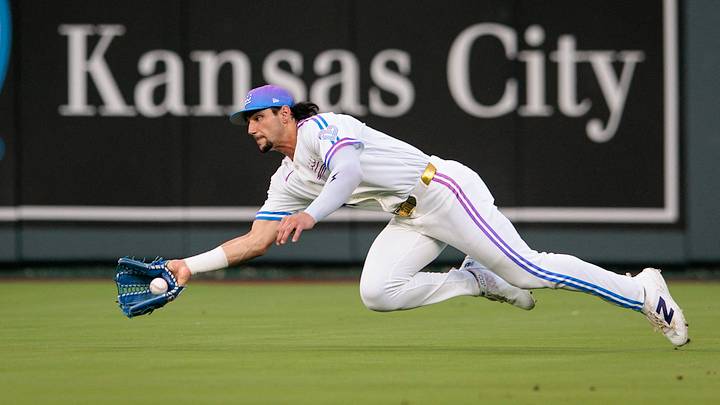
Even though Caglianone struggled to produce at the plate and had some moments where he looked like he was learning right field on the fly, there was not much opposition to him starting 2026 as the team's primary right fielder, thanks in part to plays like this.
A year and a half later, that plan looks less settled than it did at the time, especially with 30 games left on the schedule. This summer, Pasquantino has missed significant time with a fractured hamate and lingering wrist soreness, pushing Caglianone into long stretches at his old position. The results have genuinely divided Royals fans wondering whether Caglianone is best served, and best serves the team, by moving back to first base full-time or staying primarily as a right fielder.
Here are a couple of reasons for each school of thought, all with the player's and the team's interests at the core.
A move to first base hopefully helps avoid lower body injuries
Caglianone is listed at 6-foot-4, 250 pounds, a big frame built for hitting baseballs a long way, not necessarily for the sprinting, jumping, and diving that right field demands over a 162-game season. The injury research backs up the concern in general terms, even if it does not isolate first base against right field specifically.
A widely cited study of MLB injuries from 2002 through 2008, published via PubMed, found that fielders as a group sustain lower-extremity injuries at nearly three times the rate of pitchers, with 47.5% of all fielder injuries occurring in the lower body compared to 16.9% for pitchers. A separate breakdown from Baseball Biographies specifically flags outfielders as prone to hamstring strains and ankle sprains tied directly to running down and jumping for fly balls, on top of occasional shoulder trouble from longer throws. And what is Caglianone dealing with right now? Ankle soreness.
First base, by comparison, is about as low-mobility a position as exists on a baseball field. Less ground to cover, less full-speed running, far less risk of colliding with a wall or diving to make a play. Kings of Kauffman's own defensive review of Caglianone this season noted his range remains the clear weakness in his outfield profile even as his arm and positioning have gotten better, but he still looks just enough out of place to call him a definitive outfielder on the MLB level.
That is not a medical diagnosis. But a player built the way Caglianone is built, playing a position that demands range he does not quite have, is a reasonable injury risk story on its own terms.
If Caglianone stays in the outfield, he'll get paid like an outfielder
The instinct here is to say outfielders simply get paid more than first basemen, but that is not actually what the research shows. A FanGraphs study on positional pay found the opposite of the simple version of this argument historically, with first basemen earning roughly twice as much per win above replacement as second basemen, and a related FanGraphs piece on positional pricing noted flatly that "nobody gets paid like first basemen and corner outfielders." Both positions have historically been rewarded for power at the plate. Neither one clearly out-earns the other as a rule.
The real argument is about WAR, not raw salary, and it is a more compelling one than the simple version. WAR applies a positional adjustment based on where a player sits on the defensive spectrum, and first base sits at the bottom of it, below every outfield spot, because it is the easiest position on the field to fill defensively. That means the identical offensive season is worth more total WAR when it is compiled in right field than at first base, purely because of what the position itself is worth relative to the alternatives a team could put there.
WAR is the currency that drives arbitration hearings and free agent contracts. A hitter who produces at an All-Star level while also playing a more defensively demanding position profiles, and gets paid, as more valuable than the identical bat at a position where the offense alone is expected to carry the load.
Caglianone is still a pre-arbitration player, drafted in 2024 and up in the majors since June 2025, which means the value he accumulates right now is directly building the case he will eventually make in arbitration and, down the line, free agency. Staying in right field, even as a defensively unspectacular right fielder, gives every home run he hits a better chance of translating into a bigger number on his next contract than the same home run would at first base.
Jac Caglianone has statistically looked better at the plate while at first base
This is the harder case to argue away, because the data behind it is specific and recent. It genuinely begs the question of causation versus correlation, but Caglianone's power numbers have certainly been better in shorter spurts at first base. Looking at when Pasquantino went back on the IL in late July to when he returned ahead of the Athletics series, that stretch was one of Caglianone's best batting runs. He swatted six home runs with 20 RBI in only 64 plate appearances, posting an absurd 213 wRC+ in that tiny sample.
Across the 2026 season, fans have seen Caglianone roaming right field more than holding down first base, but here is how his batting numbers break down between the two positions, not considering his performances at designated hitter.
Position | PA | wRC+ | HR | xwOBA | Hard-Hit% | K% | BB% | Avg. EV |
|---|---|---|---|---|---|---|---|---|
as 1B | 133 | 149 | 12 | .417 | 53.1% | 22.6% | 3.0% | 94.1 |
as OF | 300 | 121 | 9 | .348 | 43.4% | 25.7% | 7.3% | 93.1 |
The numbers are clear. Caglianone's results are better when he is at first compared to the outfield. Whether that reflects a real cause-and-effect relationship or a hot streak that happened to line up with a position change is genuinely unclear. But the numbers are the numbers, and right now they point in one direction. For what it is worth, Kansas City is 13-17 when Caglianone plays at first and 36-41 when he plays in the outfield. Are either good? Not really. But that is a whole-team stat, not just Caglianone's bat.
Royals already have a starting first baseman in Vinnie Pasquantino
On paper, this is straightforward. Pasquantino signed a two-year deal worth more than $11 million in January, covering 2026 and 2027 with incentives that can push it to $15.7 million, and he has one more year of team control in arbitration before hitting free agency in 2029. He is the presumptive long-term answer at first base, but is that because he is the better option or because he got there first?
No matter the reasoning, Royals Review's Connor Moylan put Kansas City's reality well when asking this question earlier this month. Pasquantino is not a viable outfield option. If both bats are going to be in the same lineup long-term, someone has to be the flexible one, and it is not going to be him.
"I understood and supported why the Royals started with Pasquantino at first base and Caglianone in right field; I assume Vinnie would look Schwarber-like if he was forced to take an outfield spot."Connor Moylan, Royals Review
In practice, though, this reason is more complicated than it looks on paper, and it is worth being honest about that. Pasquantino fractured his right hamate bone on June 13, had surgery the next day, missed nearly a month, returned July 10, and landed right back on the injured list July 29 with wrist soreness tied to the same injury. Pasquantino has been red-hot since his most recent return, slashing .385/.448/.769 without a single strikeout and six extra-base hits across 29 plate appearances. But on a season level, Pasquantino is still far behind his 32 home runs and 113 RBI from 2025, when he posted a full-season-best 116 wRC+.
The player Caglianone is theoretically keeping first base clear for has not been able to hold onto the job himself this season, which is exactly why Caglianone has already logged 113 plate appearances there in the first place.
"The Royals already have a first baseman" is true as a matter of contract and long-term planning. It has been considerably less true as a matter of who has actually been available to play the position in 2026. Any argument for keeping Caglianone in the outfield because Pasquantino owns first base has to reckon with a season in which Pasquantino has barely been healthy enough to own it.
None of these four reasons cancels out the others emphatically. The injury case for first base is general, built on how outfielders get hurt rather than a study of Caglianone specifically. The hot streak that coincides with his first base time is small, a few games against a season's worth of at-bats elsewhere. The value case for staying in right field is sound in theory but depends on the Royals actually needing him to fill that defensive spot rather than parking him at the position where he is most comfortable. And the case for leaving first base to Pasquantino gets harder to make every time Pasquantino ends up back on the injured list.
What is true underneath all four arguments is that Caglianone's bat is good enough that the Royals are going to have to make a real decision here rather than let the schedule and the injury report make it for them indefinitely. Where he ends up playing every day in 2027 will say a lot about how Kansas City weighs short-term outfield value against a long-term relationship with the position he has always looked most natural at.
 Add us as a preferred source on Google